You cannot improve brand awareness if you do not know where it stands today. Many South African businesses guess. They look at website traffic or follower counts and assume people know who they are. A short questionnaire for brand awareness replaces that guess with answers from the people you want to reach.
Here is the direct answer. A good brand awareness survey mixes unaided questions, where people name brands without prompts, with aided questions, where you show your name and ask if they recognize it. Add a few on perception and where they heard of you. Ten well-chosen questions are enough. Keep it under five minutes, or people will drop out.
Below, you get 10 sample questions you can copy straight into Google Forms or SurveyMonkey. Each one shows what it measures and how to read the answers. We use this kind of baseline at Purple Word Box before building PR and media plans, because you cannot judge coverage without a starting point. Use the questions as your own brand awareness survey template.
1. Which brands come to mind in your category?
Question type and what it measures

This is the unaided recall question, sometimes called top-of-mind awareness. You ask an open question and give no list, no logo, no hint. It shows whether your brand lives in people’s heads without any help. It is also the hardest awareness test to pass, which makes it the most honest measure of where you stand.
Expect low numbers. In most categories people name two or three brands at most. A challenger brand scoring 8% unaided is often doing better than it feels.
When to use it
Place it first. Every questionnaire for brand awareness should open with this question, because once respondents see your name, unaided recall is contaminated. Run it as a baseline before a PR push, then repeat it every six to twelve months.
Ask for unaided recall before your brand name appears anywhere in the survey, or the answer is worthless.
Send it to your target market, not only your customers. Customers already know you, so a customer-only sample flatters your result and hides the real gap with prospects.
How to word it and score the answers
Keep the wording neutral. Name the category, not your brand, and cap the number of answers so people do not stall on a blank box.
When you think of [category], which brands come to mind? List up to three.
Then code each response into three numbers.
| Metric | How to calculate |
|---|---|
| First-mention share | Respondents who list you first ÷ total respondents |
| Total unaided awareness | Respondents who list you anywhere ÷ total respondents |
| Competitor share | The same calculation for each rival |
Say 200 people answer and 30 name you somewhere. Your unaided awareness is 15%. If 12 of them name you first, your first-mention share is 6%. Compare both against your closest competitors, not against 100%.
Common mistakes to avoid
Most errors start with the category. "Financial services" is too broad, and people will answer with banks. "Cloud payroll software for businesses with 20 staff" is so narrow that nobody answers. Pick a category your buyers would actually use in conversation.
Another trap is messy coding. Respondents write "Purple Wordbox" or "that PR lady’s company", and a strict match undercounts you. Agree on a spelling list before you tally, and log misspellings as hits.
2. Have you heard of [brand]?
Question type and what it measures
This is the aided awareness question. You name your brand and ask a simple yes or no. It measures basic recognition, a far lower bar than the unaided recall in question 1.
Expect a much bigger number than before. The gap between the two shows how much your name depends on a prompt.
Aided awareness tells you who recognizes your name, not who remembers it.
When to use it
Place it after the unaided questions, never before. Showing your name early contaminates recall. It works well in any brand awareness survey that needs one headline figure to compare before and after a media campaign.
How to word it and score the answers
Keep it plain and give people an honest way out.
Have you heard of [brand]?
( ) Yes  ( ) No  ( ) Not sure
Divide the "Yes" answers by total respondents. If 90 of 200 say yes, aided awareness is 45%. Report "Not sure" separately, because it often hides weak familiarity worth tracking.
Common mistakes to avoid
People like to agree, so a lone question inflates your result. Two fixes help:
- Add a fake brand to the list. Anyone who claims to know it is guessing, so subtract those false positives from your score.
- Ask about competitors too. Your 45% means little until you see that a rival scores 70%.
3. Which of these brands have you heard of?
Question type and what it measures
This is prompted recognition in multiple-choice form. You show a list of brands, yours among them, and respondents tick every name they know.
Unlike question 2, it gives you competitor benchmarks from the same person in the same moment. You see where you rank, not just whether people know you.
When to use it
Place it after your unaided questions and before anything brand-specific. It can replace question 2 in a short questionnaire for brand awareness, because it captures the same aided figure with rivals alongside.
Keep the sample and list consistent in every wave, so each result compares cleanly with the last.
A brand list shows your awareness next to your rivals’, and that comparison is what makes the number meaningful.
How to word it and score the answers
Include six to ten brands, shuffle the order for each respondent, and slip in one invented name. Add "None of these" so people are not pushed to guess.
Which of these brands have you heard of? Select all that apply.
[ ] Brand A  [ ] Brand B  [ ] [Your brand]  [ ] Brand C  [ ] [Fake brand]  [ ] None of these
Divide the ticks for each brand by total respondents. If 120 of 200 tick you, aided awareness is 60%. Handle fake-brand ticks as in question 2 and adjust for false positives.
Common mistakes to avoid
Most list questions go wrong in three ways:
- Overlong lists. Past ten brands, people start ticking at random.
- Fixed order. Names at the top collect more ticks, so randomize the order.
- Lopsided rivals. Include the competitors your buyers actually consider, not only the giants.
4. Where did you first hear about [brand]?
Question type and what it measures
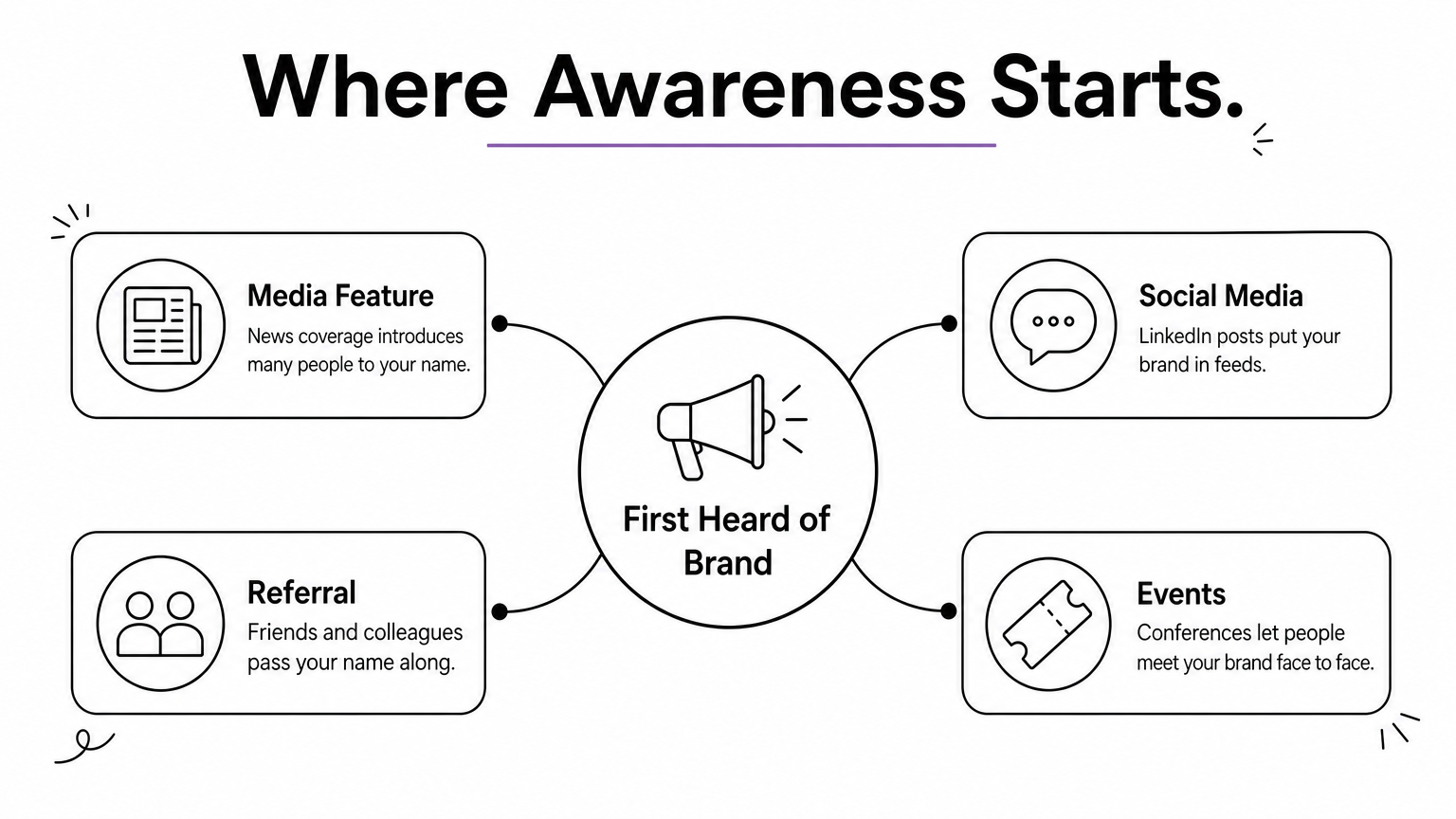
This is a source-of-awareness question. It asks people to name the channel where they first met your brand. The answer shows which channels actually build awareness, so you can tell whether media coverage, LinkedIn, referrals or events are doing the work.
Only ask people who said yes in question 2 or 3. Anyone who has never heard of you cannot answer honestly.
When to use it
Use it after a PR push, a product launch or an event, when you want to know what paid off. It also belongs in any brand awareness survey that feeds a budget decision, because it ties awareness to specific channels.
Awareness without a source is a number you cannot act on.
How to word it and score the answers
Offer a closed list, add "Other" and give an honest way out.
Where did you first hear about [brand]? Select one.
( ) News article or media feature
( ) LinkedIn or other social media
( ) Google search
( ) Friend, colleague or referral
( ) Event or conference
( ) Advertising
( ) Other (please specify)
( ) I don't remember
Divide each source by the number of aware respondents, not the whole sample. If 90 people know you and 27 first saw you in a media feature, media drives 30% of your awareness. Compare that share with what you spend on each channel.
Common mistakes to avoid
Memory is the main weakness. People often credit the most recent touchpoint, so stress the word "first" in the question. Keep the list to eight options or fewer, and read the "Other" answers, because they often reveal a channel you never tracked.
5. Do you recognize this logo?
Question type and what it measures
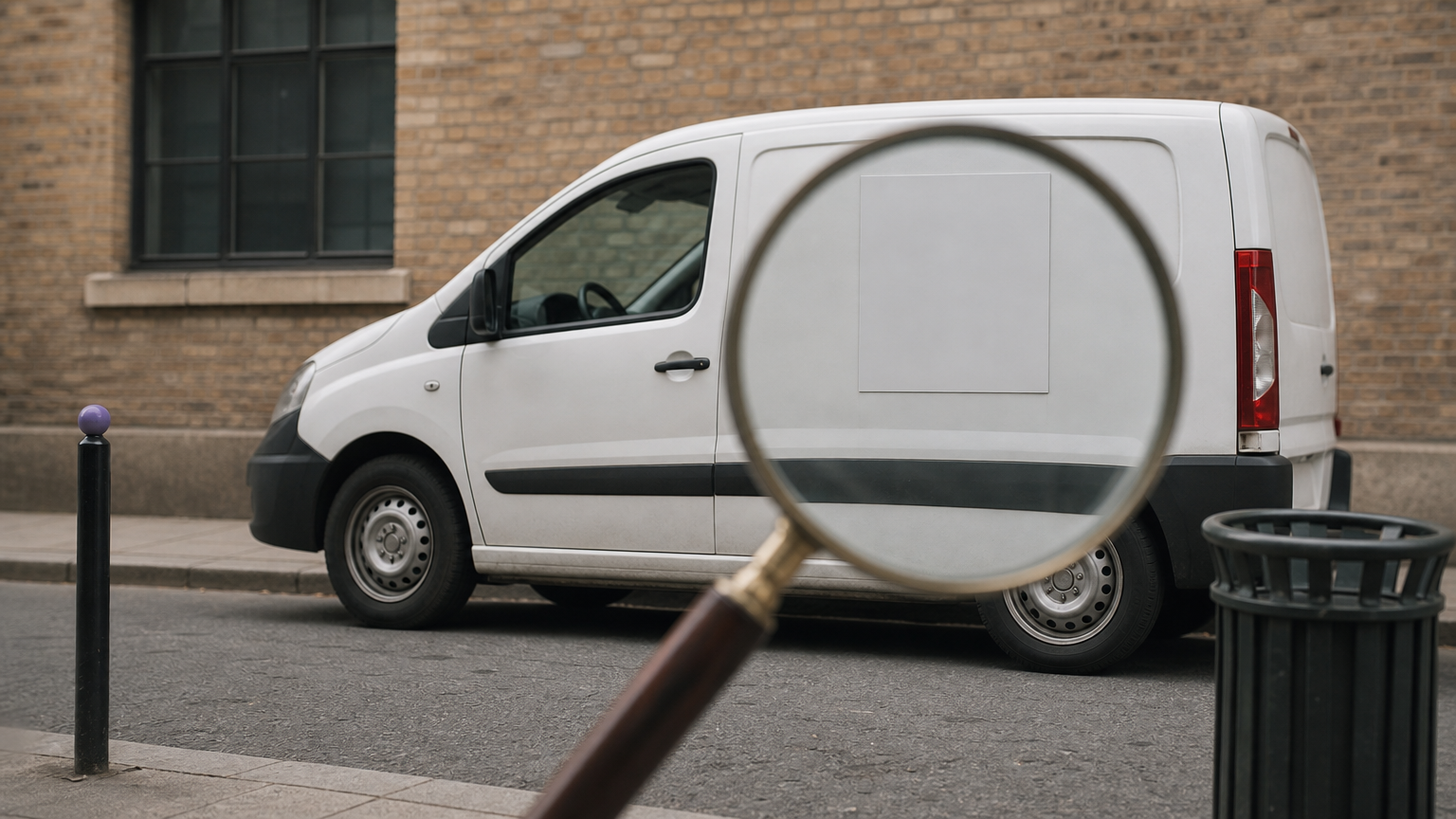
This is visual recognition. You show your logo with no name attached and ask whether people have seen it. It tests whether your brand identity sticks, even when someone cannot recall your name.
Someone may fail the unaided question in question 1 and still spot your logo on a delivery van. That gap tells you your visuals work harder than your name.
When to use it
Use it after a rebrand, a signage rollout or a sponsorship where your logo does the talking. It earns a place in any questionnaire for brand awareness aimed at a visual, social-first audience.
A logo people recognize but cannot name is awareness you have only half earned.
Place it after the name-based questions, and treat it as an add-on to your brand awareness survey template, not a replacement for it.
How to word it and score the answers
Show the image at a consistent size, then ask for the name.
Have you seen this logo before? [image]
( ) Yes ( ) No ( ) Not sure
If yes, which brand does it belong to? ________
Calculate recognition as "Yes" answers ÷ total respondents, and attribution as correct names ÷ total respondents. If 100 of 200 say yes but only 60 name you correctly, recognition is 50% and attribution is 30%.
Common mistakes to avoid
Three slips spoil the data:
- Including the brand name in the image. Text gives the answer away, so show the symbol alone if you have one.
- Skipping the follow-up. "Yes" is cheap to tick, so verify with the name.
- Testing an outdated version. Show only the logo you use now.
6. What three words describe [brand]?
Question type and what it measures
This is a brand association question. It moves past "do they know you" to "what do they think of you", which matters more once recognition is in place.
Answers reveal the words attached to your name, in your customers’ language, not the language in your brochure.
When to use it
Place it after the aided questions, and show it only to respondents who know your brand. A questionnaire for brand awareness that stops at recognition misses this layer, so use it after a PR campaign, a rebrand or a shift in positioning.
Compare the words with the image you want. If you aim to be seen as "trusted" and people say "cheap", you have a messaging problem, not an awareness problem.
Recognition tells you people know your name, and association tells you what that name means to them.
How to word it and score the answers
Ask for three words in separate boxes, so the data stays clean.
Which three words come to mind when you think of [brand]?
1. ________  2. ________  3. ________
Group similar words into themes such as "reliable", "expensive" or "friendly". Divide the respondents who mention each theme by your aware respondents. If 60 of 150 use a trust-related word, your trust theme scores 40%. Tag every theme as positive, neutral or negative to get a net sentiment figure.
Common mistakes to avoid
Three errors weaken this question:
- Offering a word list. Suggested words turn real perception into a prompted guess, so keep it open.
- Asking people who do not know you. They invent answers. Filter them out using question 2 or 3.
- Counting words instead of themes. "Quick" and "fast" are one idea, so merge them before you tally.
7. How familiar are you with [brand] versus competitors?
Question type and what it measures
This is a comparative familiarity question. Respondents rate how well they know each brand on a scale, yours beside your rivals’. It measures depth of knowledge, which a yes or no cannot show.
Two brands can both reach 70% aided awareness. One is known well, and the other is only a name on a list. This question separates them.
When to use it
Run it after the aided questions, and show it only to people who know each brand. It suits crowded categories, where competitive positioning matters more than raw recognition. Use it in a brand awareness survey that has to explain why a well-known rival still wins deals.
Awareness tells you who has heard of you, and familiarity tells you who actually knows you.
How to word it and score the answers
Use one five-point scale for every brand, and shuffle the brand order.
How familiar are you with each brand?
1 = Heard the name only  2 = Know a little  3 = Know it fairly well  4 = Know it well  5 = Know it very well
[Your brand]  1 2 3 4 5
Brand A       1 2 3 4 5
Brand B       1 2 3 4 5
Calculate the average rating for each brand, then the top-two-box share, which is the percentage who pick 4 or 5. If 50 of 200 rate you 4 or 5, your share is 25%. A rival at 60 of 200 sits on 30%, and that five-point gap is your target.
Common mistakes to avoid
Most problems come from the scale itself:
- Vague labels. Name every point, because "3" means different things to different people.
- Averaging in non-aware respondents. Leave out anyone who has never heard of a brand, or you mix awareness with familiarity.
- Picking weak rivals. Rate the brands your buyers shortlist, not the ones that flatter you.
8. How likely are you to recommend [brand]?
Question type and what it measures
This is the Net Promoter Score (NPS) question. It goes beyond awareness to measure advocacy, meaning whether people who know you would put their own name behind you. Awareness that never turns into a referral does little for growth.
When to use it
Place it late in your questionnaire for brand awareness, and show it only to respondents who know your brand well. Someone who has merely heard the name cannot judge you. It works best after a PR push, when you want to see whether visibility is building trust.
Recommendation shows whether awareness has turned into trust.
How to word it and score the answers
Use the standard 0 to 10 scale, then add one open follow-up.
How likely are you to recommend [brand] to a friend or colleague?
0 1 2 3 4 5 6 7 8 9 10
(0 = Not at all likely, 10 = Extremely likely)
What is the main reason for your score? ________
| Group | Scores |
|---|---|
| Promoters | 9 to 10 |
| Passives | 7 to 8 |
| Detractors | 0 to 6 |
Subtract the detractor percentage from the promoter percentage. If 200 people answer, with 80 promoters and 50 detractors, you get 40% minus 25%, so your NPS is +15.
Common mistakes to avoid
Three habits weaken the result:
- Skipping the "why". The score alone cannot tell you what to fix, so read the open answers.
- Using a tiny sample. Below roughly 100 responses, one or two people can swing the score noticeably.
- Mixing in non-aware respondents. Their scores measure guesswork, not your brand.
9. What message did you take from our recent campaign?
Question type and what it measures
This is a message recall question. It checks whether the point of your campaign reached people, not just whether they noticed it.
Reach and reception are different things. A campaign can earn coverage and impressions, yet leave audiences with the wrong takeaway, or none at all. This question shows you the gap.
When to use it
Run it four to eight weeks after a launch, press push or event, while memory is still fresh. Show it only to people who recall seeing the campaign, so filter with an earlier question.
Inside a questionnaire for brand awareness, it connects your PR activity to what people now believe about you.
A campaign has only worked when people repeat your message, not just your name.
How to word it and score the answers
Keep it open and never hint at the message you intended. Use plain, neutral wording.
In your own words, what was the main message of [campaign]? ________
Code each answer against your intended message:
- Full match: they state your core point.
- Partial match: they get the theme but miss the detail.
- Miss: they name something unrelated.
Divide full matches by the respondents who recall the campaign. If 40 of 100 state your point, message recall is 40%.
Common mistakes to avoid
Two errors skew this result most. The first is asking everyone, including people who never saw the campaign, who then guess. The second is leading wording such as "Did our campaign show we are the most reliable?", which hands people the answer.
Also agree on your coding rules before you tally, so a second reader would score each answer the same way.
Putting your questionnaire to work
Ten questions give you the full picture. Unaided recall shows who remembers you, aided questions show who recognizes you, and the perception, recommendation and campaign questions show what people believe. Together they turn a vague sense of visibility into numbers you can track.
Keep your questionnaire for brand awareness short, ask the unaided question first, and send it to your real target market. Then repeat it every six to twelve months with the same questions and a similar sample, so every result compares cleanly with the last.
Once you have a baseline, the work is acting on it. If you want senior-level help turning those results into media coverage and stronger visibility, talk to Purple Word Box about a PR strategy built on your survey results. You get honest, practical advice straight from an experienced practitioner.