

You have a budget, a launch date, and a nagging question: how many weeks do you run this thing before you pull the plug? Stop too early and you waste the spend. Run too long and you pay for impressions that no longer move anyone.
Here is the short answer. How long a brand awareness campaign should last depends on your goal, but most businesses need at least 90 days to see real movement. Paid bursts on Meta or Google can show reach within 2 to 4 weeks. Organic social and earned media take 3 to 6 months to build recall. Evaluate at fixed checkpoints, not on a hunch.
At Purple Word Box, we help South African businesses build visibility through media relations, content, and social profile building, so we see these timelines play out in practice. Below, you will find timelines by channel and goal, the metrics that tell you it is working, and the signs that it is time to stop, adjust, or extend.
Why campaign length shapes brand awareness results
Awareness is a memory problem, not a click problem. Someone has to see your name, remember it, and connect it to something useful. That rarely happens after one exposure, which is why how long a brand awareness campaign should last matters as much as how much you spend.
Short campaigns buy reach, not recall
A two-week burst can put your name in front of thousands of people. But reach only counts who saw you once, and a single sighting fades fast. Without repetition, most of that audience forgets you within days.
Paid platforms add a practical limit. Meta and Google both need time to learn who responds to your ads, so the first week or two is often your least efficient. Cut the campaign there and you stop just as delivery starts to improve.
Longer campaigns build familiarity and trust
Time lets people meet you more than once, in different places. A prospect might see your LinkedIn post in month one, read a press mention in month two, and recognize your name when your email lands in month three. That repeated, varied exposure is what turns a name into trust.
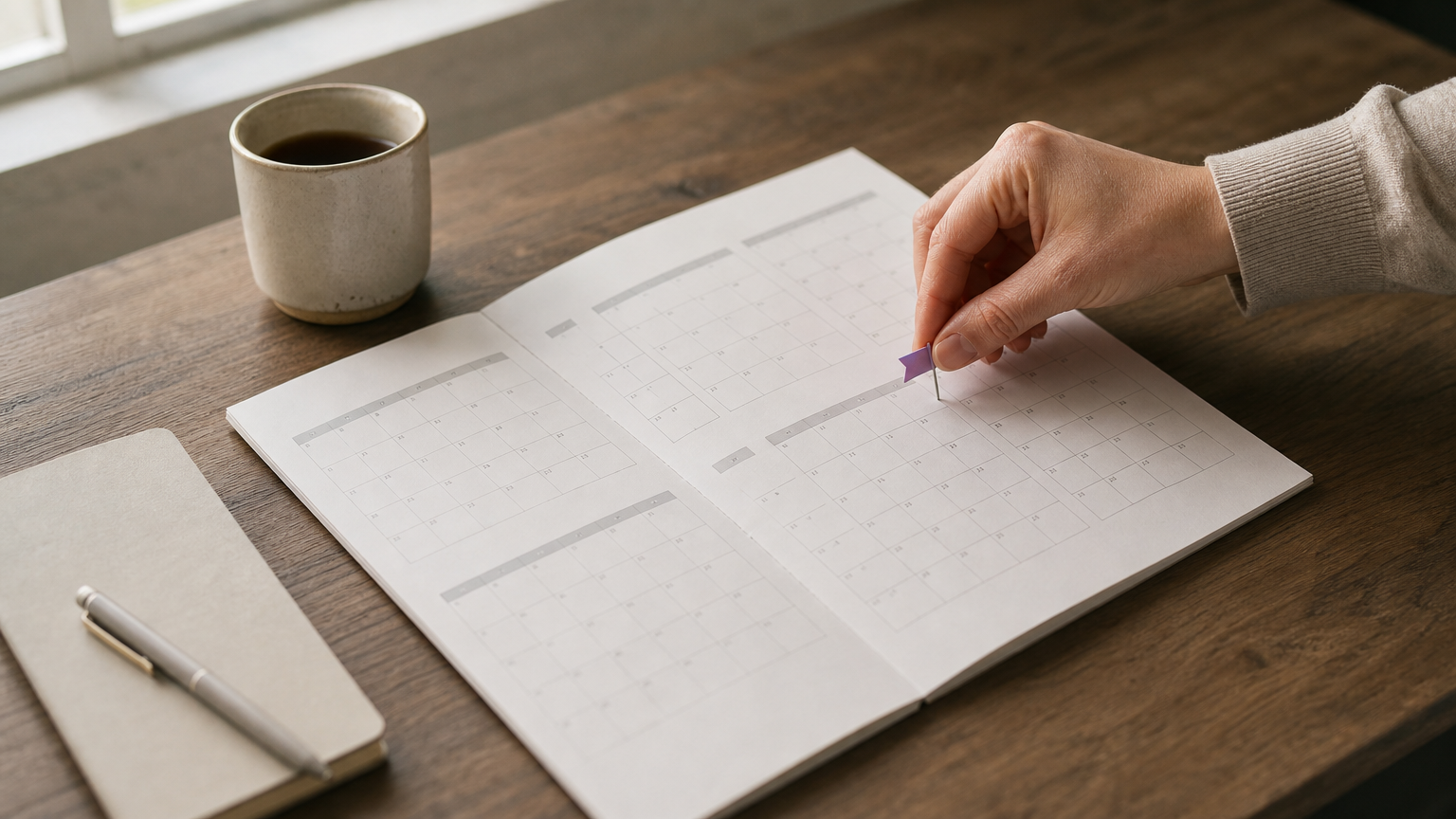
A brand awareness campaign works when people see you often enough to remember you, and that takes weeks, not days.
Here is what each stage can realistically deliver:
| Duration | What you can realistically expect |
|---|---|
| 2 to 4 weeks | A reach spike and early engagement signals |
| 2 to 3 months | Rising recall, more branded searches, repeat visitors |
| 6 months or more | Established familiarity, with earned media and content compounding |
How to choose the right duration for your campaign
How long a brand awareness campaign should last comes down to your goal, your starting point, and your budget. A round number like 30 days is rarely the right answer.
Match the timeline to your goal
Launches need less time than introductions. A new product or event builds on an audience you already have, while an unknown brand starts from zero. Treat the table as minimum windows, then adjust for your starting point.
| Situation | Minimum run time |
|---|---|
| New product or event | 4 to 8 weeks |
| Unknown brand, new market | 3 to 6 months |
| Known brand, fresh message | 6 to 8 weeks |
| Always-on presence | 6 to 12 months, reviewed quarterly |
Let your budget set the intensity
Budget decides how hard you push, and that decides how long you can last. Thin spend stretched over six months delivers too little frequency to be remembered. A shorter, concentrated flight usually does more.
Fund a campaign for the length it needs, or narrow the audience until you can.
If you cannot fund 90 days at meaningful frequency, narrow your audience by region or job title rather than shortening the run. A tight audience seen often beats a broad one seen once.
Recommended timelines by channel: Meta, Google and social
Each channel has its own rhythm, so one duration will not fit all of them. Use these ranges as a starting plan, then adjust once your own data comes in.
Paid channels: Meta and Google
Paid media gives you control, but it needs a learning period. Plan for at least two weeks before you judge results, because delivery improves after that.
Give every paid channel two weeks to learn before you judge it.
| Channel | Minimum run | Best-fit window |
|---|---|---|
| Meta (Facebook, Instagram) | 2 weeks | 4 to 8 weeks |
| Google (YouTube, Display) | 3 weeks | 4 to 12 weeks |
| Google Search (branded terms) | Ongoing | Small always-on budget |
Organic social and earned media
Organic social is slow. Post consistently on LinkedIn for 3 to 6 months before you expect steady follower and engagement growth.
Earned media moves slower still. A pitch can take weeks to land, and journalist relationships build over six months or more. The payoff is credibility that paid ads cannot buy.
How to evaluate progress and know when to stop
Choosing how many weeks or months to run is only half the job. Set your checkpoints before launch, so you judge results on evidence and not on mood. Then stop only when the data says so.
Checkpoints and metrics
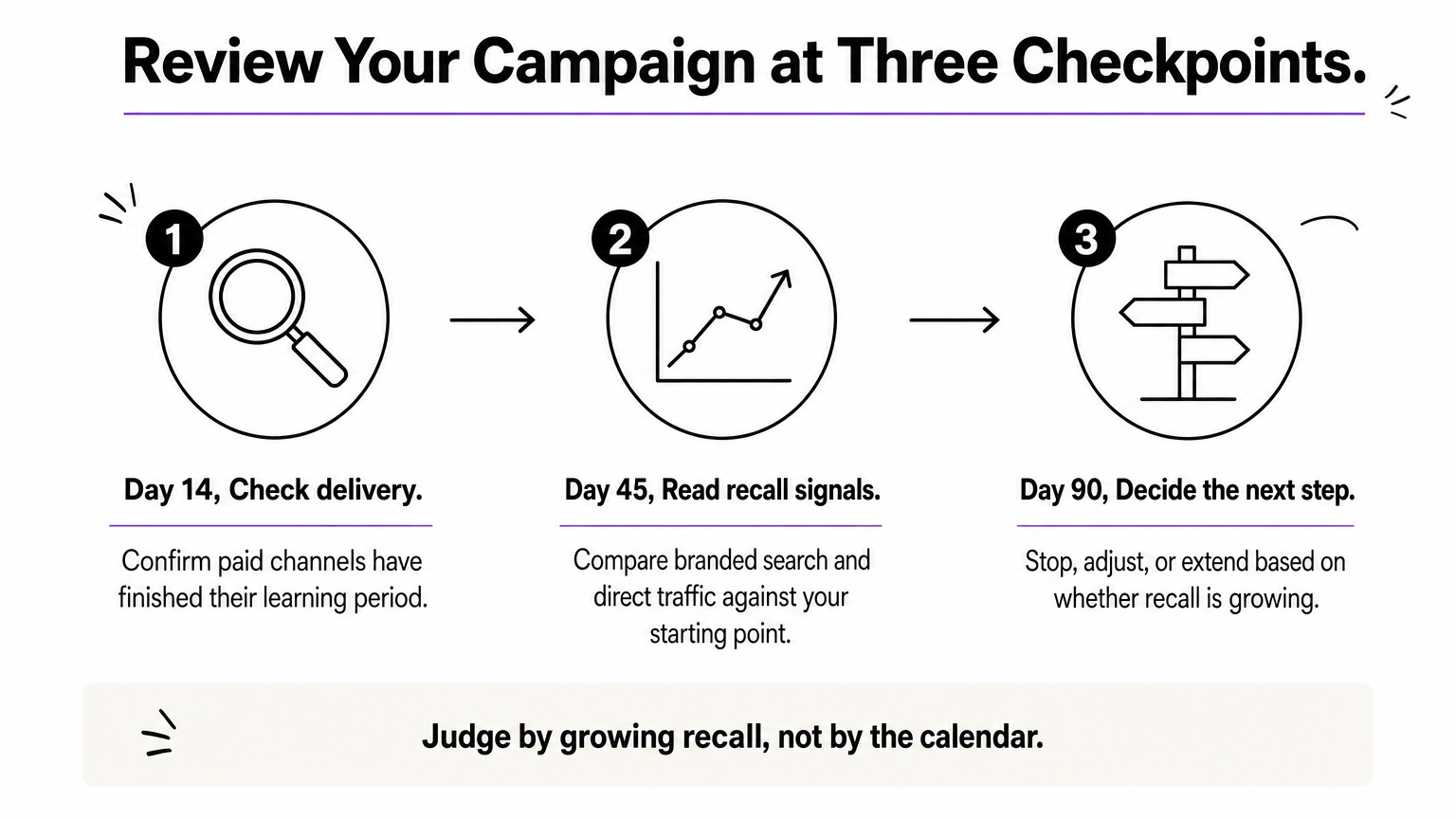
Review at day 14, day 45, and day 90. Track signals of memory, not clicks:
- Branded search volume in Google Search Console
- Direct website traffic
- Frequency, meaning how often each person saw you
- LinkedIn follower and engagement growth
- Media mentions and the traffic they send
When to stop, adjust, or extend
Stop or rework when frequency passes five or six while branded search stays flat. As a rule of thumb, that means your audience is saturated, so refresh the creative or the audience first.
Extend when branded search and direct traffic keep rising at each checkpoint. Recall is still building, so cutting now wastes the groundwork.
Judge a campaign by whether recall is still growing, not by the calendar.
Finally, a pause is not a failure. Pausing paid spend while your content and PR continue keeps momentum, and you can restart a short burst when a launch or event arrives.
Example timelines for South African businesses
These are illustrative scenarios, not client results. They show how long a brand awareness campaign should last when budgets and starting points differ.

Three plans compared
Each plan sets a clear run time and a review point before launch.
| Business | Timeline | Approach |
|---|---|---|
| Johannesburg B2B software firm, unknown outside its niche | 6 months | Founder LinkedIn posts, trade media pitches, small Meta retargeting from month two |
| Cape Town retailer launching a seasonal range | 6 weeks | Meta and Instagram burst, local press release |
| Durban training provider with a known name | 8 weeks | New message on LinkedIn and YouTube ads, then a quarterly review |
What the plans share
Notice that none of them relies on a calendar alone. The software firm reviews branded search at day 45 and day 90, and extends only if it keeps rising. The retailer pauses paid spend after week six but keeps posting.
Budgets in rand matter too. A small firm that cannot fund 90 days of Meta should narrow its audience by city or job title and keep the run length.
Shrink the audience before you shrink the timeline.
Setting a timeline you can stick to
So, how long should a brand awareness campaign last? Plan for at least 90 days, with paid bursts of 2 to 8 weeks inside that window, and give organic social and earned media 3 to 6 months or longer. Let your goal and budget set the length, and narrow the audience before you shorten the run.
The real discipline is the review. Set checkpoints at day 14, 45 and 90 before you launch, and watch branded search, direct traffic and frequency. Extend while recall keeps growing, and rework the creative when frequency climbs but branded search stays flat.
If you want a senior practitioner to help you plan this, talk to Purple Word Box about a PR and visibility plan. We will help you choose a timeline that fits your budget and your market, and then keep you honest about the results.