

Media relations importance comes down to one idea: when a journalist covers your business, readers trust that coverage more than anything you say about yourself. Media relations is the practice of building and keeping working relationships with journalists, editors, producers and bloggers so that your news, expertise and opinions reach the public through independent channels. That is why it matters. It earns credibility, visibility and goodwill that you cannot buy with advertising.
This article explains why media relations matters, how to build it step by step, how it differs from advertising and your own content, and how to tell whether it is working. You will find practical examples and a simple checklist you can apply this week, whether you run a small company or speak for a larger one.
At Purple Word Box, we do this work every day for South African businesses. The advice below comes from that hands-on experience: what editors respond to, what they ignore, and why a few good relationships beat a long list of cold contacts.
Why media relations matters to your business
Media relations matters because it gives you third-party credibility, wider reach and a protected reputation, all at once. Each of these supports the others, and together they shape whether customers, partners and investors take you seriously.
It earns trust that advertising cannot buy
When you say your company is reliable, that is a claim. When a respected publication says it, that is a verdict. Readers know the difference. Earned coverage carries the editor’s judgment that your story is worth telling, and some of that standing transfers to you.
This is especially useful when you are less established than your competitors. A small South African firm quoted as an expert in a business or trade title can look as credible as a much larger rival. Trust compounds over time, because each placement makes the next one easier to win.
Coverage is an endorsement you cannot write for yourself.
It makes you visible where your audience already looks
Your customers read news, listen to radio and follow industry titles long before they search for a supplier. Media relations puts your name in those places. Each placement also tends to bring website visits, social shares and LinkedIn engagement from people who had never heard of you.
There is a search benefit too. Coverage on established news sites often links back to your website, and those links help your pages perform better in search. It is a side effect of good coverage, not the reason to pursue it.
It protects your reputation when things go wrong
Every business faces a bad day: a service failure, a product recall, a rumor, a critical review that spreads. If journalists already know you, they will call you for comment and give your side a fair hearing. If they have never heard of you, they will report what they can find.

Crisis management is where media relations pays back years of groundwork. A trusted spokesperson who answers quickly and honestly can shape how a story is told. Preparation also helps. Agree on who speaks for the company, and keep a short holding statement ready before you need it.
How to build media relations that work
Effective media relations follows a simple sequence: set a goal, find the right journalists, pitch a real story, and keep the relationship alive. Skipping the first step is the most common reason businesses never see results.
Start with a goal and a real news angle
Decide what you want coverage to do. Launch a product, position your CEO as an authority, attract recruits or reassure clients. Then ask whether you have something a journalist would call news. A new hire is rarely news. Original data, a clear opinion on a trend, or a useful lesson from your own experience often is.
Newsworthiness is judged by the reader’s interest, not yours. If you cannot explain why a stranger should care in one sentence, keep working on the angle.
Build a focused media list
A good media list is short and specific. Read what each journalist has published in the last few months. Note their beat, their tone and the kind of sources they quote. Twenty well-researched contacts will serve you better than two hundred names pulled from a database.
Include trade publications, regional titles, radio, podcasts and online news. Niche outlets often welcome expertise that national newsrooms cannot spare time for, and their readers are usually your actual buyers.
Pitch like a journalist’s colleague
Treat the pitch as an offer of help. Follow these steps:
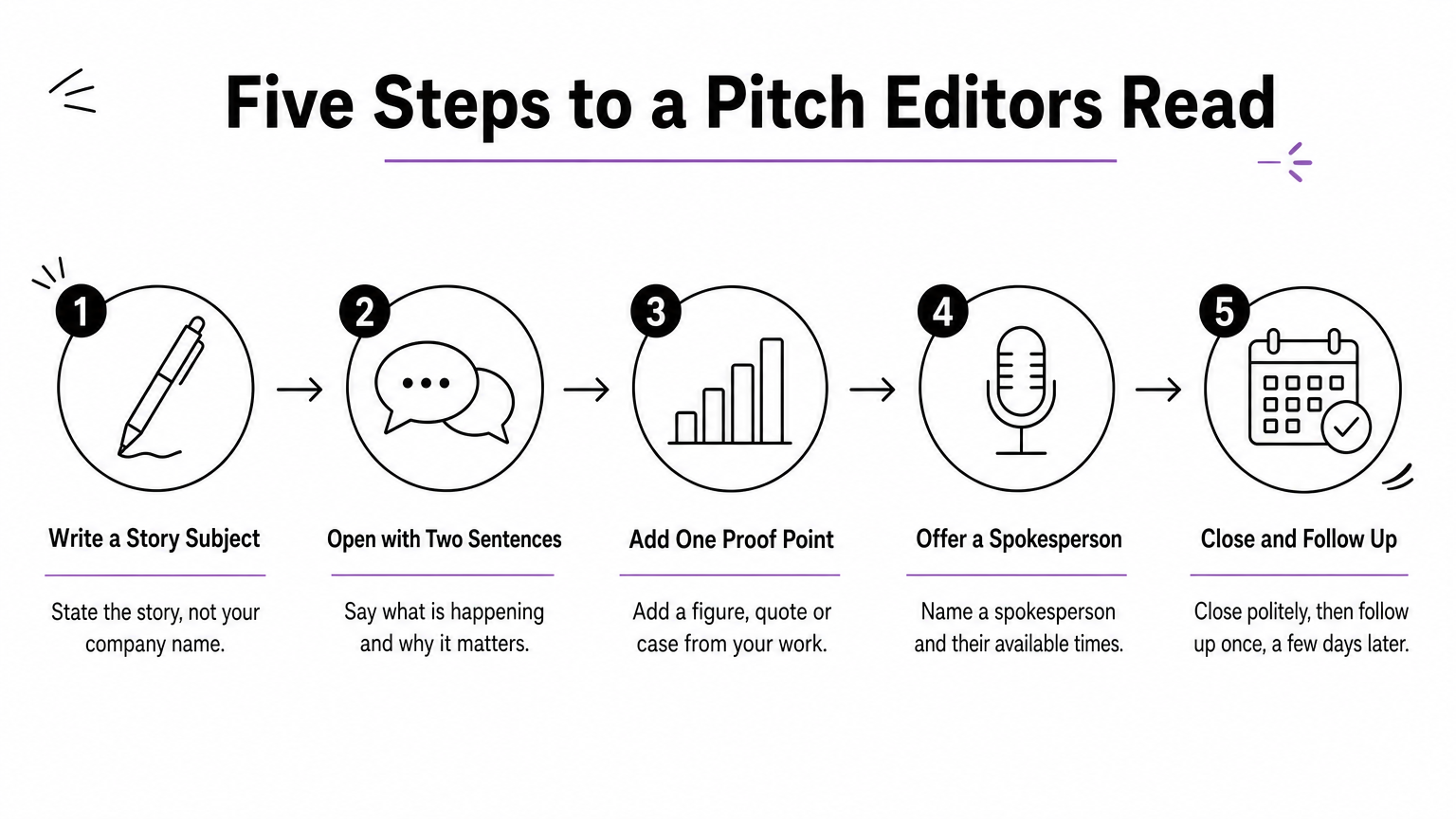
- Write a subject line that states the story, not your company name.
- Open with the point in two sentences: what is happening, and why it matters to their readers.
- Add one piece of evidence, such as a figure, a quote or a case from your own work.
- Offer a named spokesperson and the times they are available.
- Close politely and follow up once, a few days later.
Never send the same message to everyone. Personalization shows you have read their work, and irrelevant pitches are the quickest way to be ignored.
Keep the relationship going
Relationships are built between pitches. Share a journalist’s article when it is good, answer deadlines quickly, and say so when a story is not right for them. Reliability is what makes an editor reply to your next email.
Journalists remember the sources who made their job easier.
How media relations differs from advertising and owned content
Media relations produces earned media, which you win through merit, while advertising is paid and your website or blog is owned. Knowing the difference helps you judge what each can do for your media relations importance in your wider marketing.
Earned, paid and owned side by side
| Earned (media relations) | Paid (advertising) | Owned (website, blog, social) | |
|---|---|---|---|
| Who controls the message | The journalist | You | You |
| Cost | Time, expertise, agency fees | Media spend | Production time |
| Credibility with readers | High | Lower | Moderate |
| Speed | Slow to build | Immediate | Gradual |
| Lifespan | Often long, searchable | Ends when payment stops | Lasts as long as you maintain it |

The trade-off is control. With an advertisement you choose every word. With earned coverage you choose the angle you offer, and the journalist chooses the rest. That loss of control is exactly why readers believe it.
Where each one fits
Do not treat them as rivals. Earned coverage builds credibility, owned channels give it a home, and paid media extends its reach. A strong article about your company can be shared on LinkedIn, linked in sales emails and quoted on your website.
This is also why media relations suits smaller budgets. A sharp story and a good relationship cost less than a sustained campaign, and the result lasts longer than a single flight of ads.
Earn the coverage first, then use your own channels to make it work harder.
How to tell if your media relations is working
You can measure media relations by tracking the quality of coverage and what it leads to, not just how much of it you get. Decide on your measures before the first pitch goes out, so you can adjust with evidence.
Metrics worth tracking
Count placements in the outlets your customers actually read, and note whether your key messages appear in them. Track referral traffic from coverage to your website, and new followers or profile views after a feature. Watch for inbound enquiries that mention an article, because this connects media relations to revenue.
Sentiment matters too. Is the tone positive or neutral, and are you quoted as a source or merely mentioned? Being asked for comment by journalists is one of the clearest signs that your relationships are working.
Metrics that mislead
Raw volume can flatter you. Fifty mentions in outlets nobody in your market reads are worth less than one feature in the right trade title. Be cautious with formulas that convert coverage into advertising value, because they treat editorial space as if it were a bought ad, which it is not.
Give it time. Media relations compounds slowly, and the first few months build the foundation, not the results. Review your measures quarterly and ask one question: are the right people seeing us, and do they trust what they see?
Start with one good story
Media relations matters because it earns trust, visibility and a steadier reputation through voices your audience already believes. It works best when you pursue it with a clear goal, a real news angle, a focused media list and patience, then measure what it delivers.
You do not need a huge budget to begin. You need one story worth telling and one journalist who would want to hear it. If you would like senior, hands-on guidance with that first pitch or a full media relations plan, talk to the team at Purple Word Box.