So, what is a press release kit? It is a ready-to-use bundle of information about a company, product or event that a journalist can pick up and use without chasing you for details. It usually holds the press release itself, a company background, spokesperson bios, approved quotes, images and contact details. "Press kit" and "media kit" are the common names for the same thing.
Think of the folder you would hand a reporter at a launch. Today it is usually a page on your website or a shared folder. The press release says what is happening. The kit supplies everything around it, so a journalist can check a fact, find a quote and grab a usable photo in minutes.
This article explains why a press kit matters, how to build one step by step, what to put in it for different situations, and the mistakes that make journalists ignore it. Purple Word Box writes press releases and supports events with media materials, so the advice comes from the practical side of PR.
Why a press release kit matters
A press release kit matters because journalists work to deadlines and favor the story that is easiest to verify and write. If your information is complete and easy to find, you remove the friction that makes a reporter move on.
What a kit saves journalists
A reporter who receives a bare press release usually has questions. Who can comment? Is that figure correct? Is there a photo? Each question means an email, and each email means waiting. A kit answers those questions in advance, so the journalist can verify the facts and file the story without waiting for a reply.

A kit also protects accuracy. When names, job titles, product names and figures are written down once, in your own wording, reporters copy them correctly instead of guessing.
A press kit wins coverage by removing questions, not by adding polish.
What it does for your business
A kit forces your team to agree on one version of the facts before the story goes out. Spokespeople, sales staff and the person answering the phone all work from the same material. That keeps your message consistent when several journalists call on the same day.
Be realistic about the limit. A kit makes coverage easier to give, but it does not guarantee it. Editors decide what runs, and no kit changes that.
Press kit, media kit and press release compared
The terms overlap, which causes confusion. This table separates them.
| Term | What it is | Typical use |
|---|---|---|
| Press release | One announcement written as news | Sent or posted when something happens |
| Press kit or press release kit | A press release plus supporting material | Launches, events, company background |
| Media kit | Usually the same as a press kit | Check the context |
In publishing, "media kit" can also mean the pack a magazine or website gives to advertisers, with audience figures and rates. If a journalist asks for your media kit, they almost always mean the press kit.
How to build a press release kit step by step
To build a press release kit, decide what news it supports, write the press release first, gather the supporting items, get approvals, and publish it somewhere a journalist can open in seconds.
Start with one purpose and one audience
Decide first whether you are building a permanent company kit or a kit for one announcement. A company kit covers background, leaders and brand assets, and you update it a few times a year. An announcement kit is built around one launch, event or result, and it ages quickly.
Then name the audience. A trade publication wants specifications and technical detail. A mainstream business reporter wants the impact and a human quote. Build for the reader you most want, and your choices about length and detail get easier.
The six steps
- Define the news and the audience. Write one sentence on what is new and who should care.
- Write the press release first. Everything else in the kit supports it.
- Gather the supporting items listed in the next section, and drop anything that does not help the story.
- Get sign-off. Spokespeople approve their quotes and bios, and someone checks every figure.
- Publish in an easy format. Use a web page or a simple shared folder with clear file names.
- Tell journalists it exists. Link to the kit in your pitch email, and keep it current.
Where to publish it
Put the kit on a dedicated page of your website, often called a press or media page, with the items listed in plain view. Add a downloadable folder of images next to it if the files are large. Avoid asking for a login or an email address. A journalist on deadline will not fill in a form.
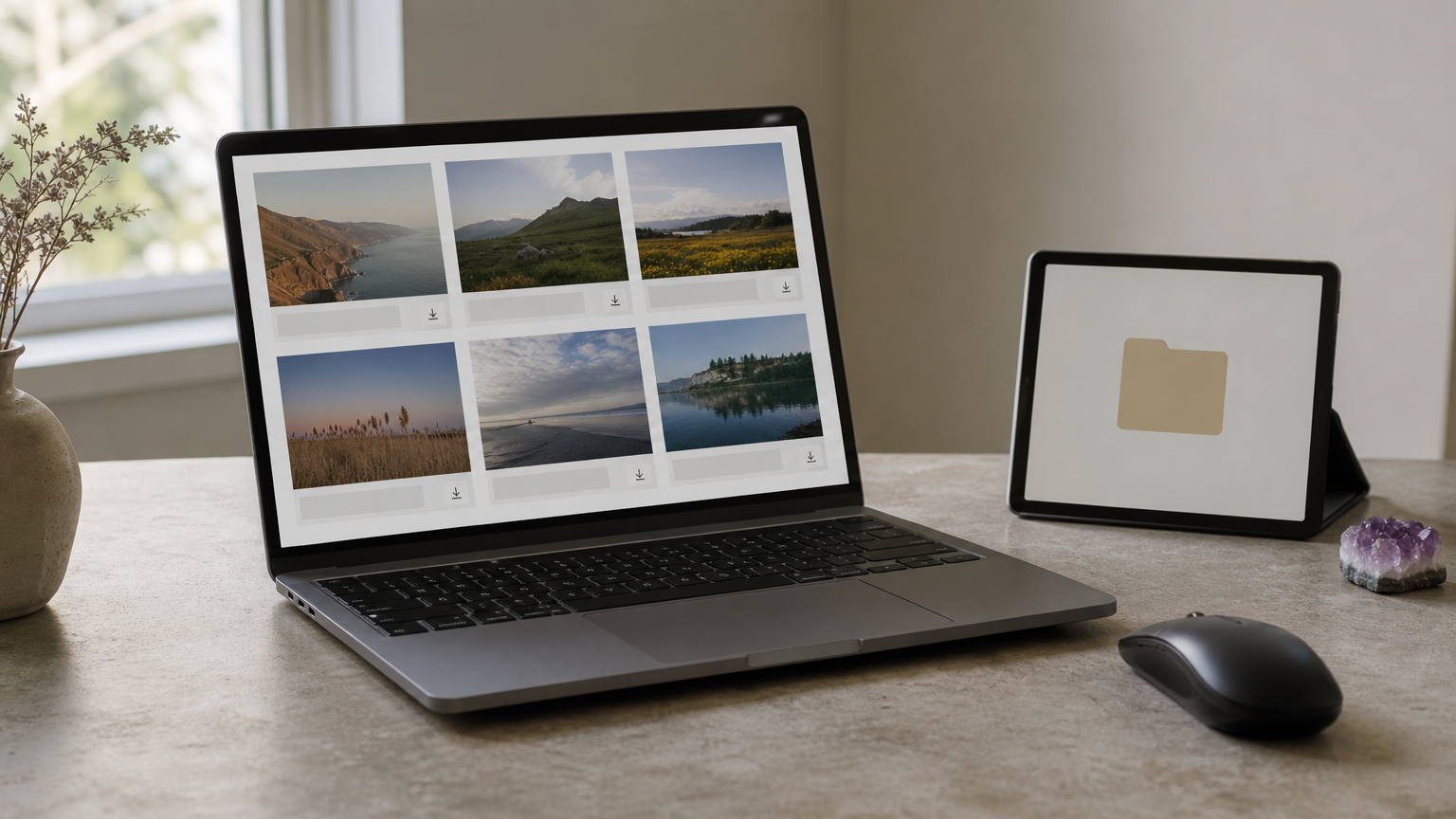
The best place for your kit is a page a reporter can reach in two clicks, without signing up for anything.
What goes into a press release kit
A good kit holds eight core items. Each one answers a question a journalist would otherwise have to ask you.
The core items
| Item | What it holds | Why a journalist wants it |
|---|---|---|
| Press release | The announcement in news format | The story itself |
| Fact sheet | Key figures, dates and specifications on one page | Quick fact-checking |
| Company background | A short "about" paragraph of around 100 words | A ready context line |
| Spokesperson bios | Name, title, short bio and headshot | Who to interview and how to describe them |
| Quotes | Approved lines from leaders or customers | Usable or a base for more questions |
| Images and logos | High-resolution photos and logo files with captions | Visuals without a request |
| Contact details | A named person with phone and email | Follow-up questions |
| Links | Website, LinkedIn and relevant social profiles | Further checking |
Optional extras include a short FAQ, a link to a demo video, earlier coverage, and embargo details if the news is not yet public.
Three kits for three situations
The mix changes with the news:
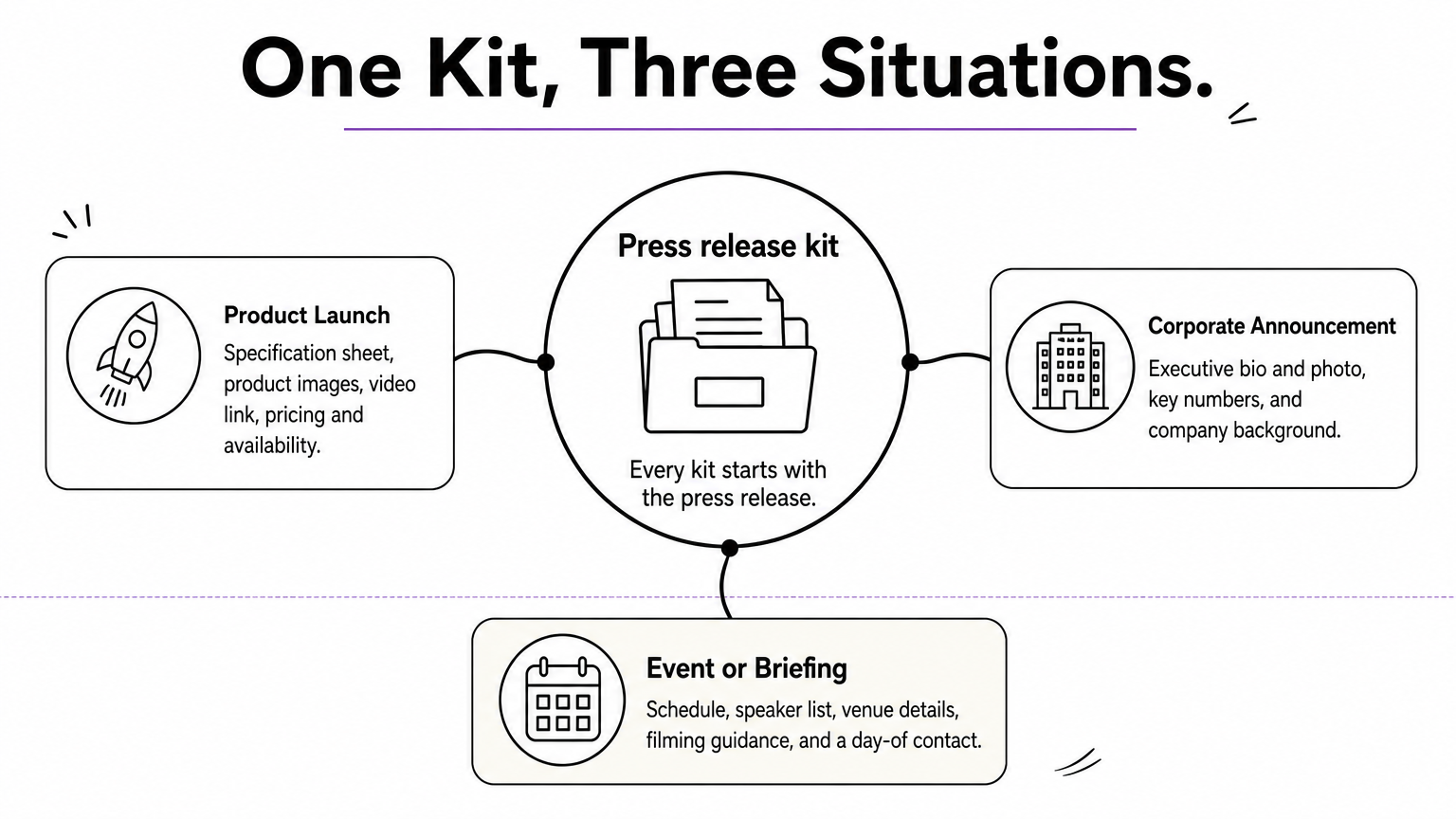
- Product launch: press release, specification sheet, product images, a video link, and pricing and availability.
- Corporate announcement, such as results or an appointment: press release, executive bio and photo, key numbers, and company background.
- Event or briefing: schedule, speaker list, venue and access details for media, photo and filming guidance, and a contact who answers on the day.
For events, the printed side matters too. Purple Word Box supports media briefings, roundtables and brand events with media coordination and branded event materials, so the physical media pack matches the digital kit.
Build the kit around the story. A launch kit and a results kit should not look the same.
Mistakes that make journalists ignore a kit
Most kits fail for ordinary reasons: they are slow, vague, out of date or too promotional. Fixing these four problems matters more than adding extra material.
The common problems
- Sales copy instead of facts. Journalists cut adjectives, so "world-class, innovative solution" gives them nothing to use.
- Missing or generic contacts. An "info@" address with no name signals that nobody will answer quickly.
- Heavy or locked files. Oversized downloads and sign-up walls cost you the reporter.
- Unlabeled images. Files called "IMG_4021" without captions or permission details are hard to publish.
Keeping the kit current
An old kit does active damage. A former executive’s name or last year’s figures can end up in print under your brand. Give one person ownership of the kit, and review it on a set schedule and after every major announcement. Put a "last updated" date on the page so a journalist can trust it.
A kit with one wrong name or outdated figure costs you more trust than having no kit at all.
A press kit is a habit, not a document
A press release kit is the full set of information that lets a journalist understand, verify and write your story without asking you for more. It works because it saves time and keeps your message consistent. It contains the press release, a fact sheet, a company background, bios, quotes, images and contact details, and you shape the mix around the news.
Build it once, keep it honest and keep it current. It will not guarantee coverage, but it will remove the most common reasons a reporter moves on. If you want help writing the press release, shaping the story or pitching it to the right media, talk to Purple Word Box about your PR needs.