

You know your product works. Your service delivers. The problem is that most of South Africa’s market has never heard your name, and that gap is costing you customers who would otherwise choose you. If you want to boost brand awareness without burning through a marketing budget on guesswork, you need tactics that actually move the needle, not vague advice about "staying consistent on social media."
The honest answer to how to build awareness for a brand is that it takes a mix of earned media, sharp messaging, and the right digital channels working together. There’s no single trick. A solid brand visibility strategy combines PR, content, and targeted digital marketing so your business shows up where decision-makers and customers are already looking.
This article walks through seven practical, tested approaches we use with clients at Purple Word Box, from media relations that get you coverage in publications your audience trusts, to digital marketing tactics that grow your LinkedIn following and website traffic. Each one is something you can start applying this week, whether you’re a small business owner or leading communications for a growing company.
1. Use PR and media relations to earn trusted coverage
When a journalist writes about your business, readers trust that endorsement far more than any ad you could run. This is why how media and public relations work together sits at the top of any serious list of brand awareness tactics: it borrows credibility from publications your audience already reads, whether that’s Business Day, Moneyweb, or an industry-specific trade site. Earned coverage isn’t just visibility, it’s third-party validation that no billboard or paid post can replicate, and that’s why earned coverage carries more weight.

How it works
Good PR starts with a story worth telling, not a generic press release about your product launch. You identify an angle that fits current news cycles or industry conversations, pitch it directly to relevant journalists, and follow up like a professional, not a spammer. This might mean securing commentary for your CEO on an industry trend, placing a bylined article under your spokesperson’s name, or coordinating interviews around a company milestone. The mechanics matter: a well-targeted media pitch sent to three journalists who actually cover your sector beats a mass email blast to fifty irrelevant contacts every time, which is the craft of media relations in a nutshell.
Earned media coverage builds trust that paid advertising simply can’t buy.
Who it’s best for
This approach suits businesses with something genuinely newsworthy to say, whether that’s a funding round, a market-first product, or a leader with strong opinions worth quoting. Small to mid-sized companies often assume PR is only for big corporates with big budgets, but that’s backwards, and it’s worth weighing whether you need an agency or can DIY your PR. A smaller, agile business with a clear message often lands coverage faster than a slow-moving enterprise, because journalists want sharp quotes and fresh angles, not corporate-speak.
How to get started
Begin by mapping which publications and journalists actually reach your target audience, then build relationships before you need something from them. Draft a media list, track what each journalist covers, and pitch stories tailored to their beat rather than sending the same release to everyone. If this feels like a full-time job on top of running your business, it’s because it usually is; this is exactly the kind of hands-on work that Purple Word Box’s PR and media relations services are built to handle, connecting you with journalists and shaping pitches that actually get read and published.
2. Build a consistent brand identity across every channel
People need to see your logo, hear your tone, and recognize your colors before they’ll trust your business enough to buy, which is what building and measuring brand name awareness comes down to. Scattered branding, a formal website next to a casual Instagram feed next to mismatched email signatures, tells customers you haven’t figured out who you are yet. A consistent brand identity is one of the simplest brand awareness tactics available, and it costs almost nothing beyond discipline.
How it works
Consistency means your logo, color palette, tone of voice, and messaging stay recognizable whether someone finds you on LinkedIn, your website, a press release, or a printed brochure at an expo. You build this through a simple brand guideline document covering fonts, colors, approved language, and dos and don’ts, then you actually enforce it across every team member who publishes content.
A brand people recognize instantly is a brand they trust faster.
Who it’s best for
This matters most for growing businesses juggling multiple people creating content, from marketing staff to executives posting on personal LinkedIn profiles. If your spokespeople all sound different and your visuals shift between platforms, this fix should come before any other brand visibility strategy on this list.
How to get started
Audit every channel your business currently uses: website, social profiles, email templates, and printed materials. Document the inconsistencies you find, then create a one-page brand guide your whole team can reference. Circulate it, and revisit it every time you onboard someone new or launch a campaign.
3. Publish content that positions you as a thought leader
Journalists and customers both gravitate toward businesses that clearly know their subject. Publishing sharp, opinionated content is one of the most underused brand awareness tactics available to South African businesses, because most competitors default to safe, forgettable posts instead of saying something worth reading. When your spokesperson consistently shares real insight, people start associating your name with expertise rather than just a product or service.
How it works
Thought leadership content takes the form of LinkedIn articles, bylined op-eds in trade publications, or commentary on industry shifts that your target audience actually cares about. You pick two or three topics your business genuinely understands, then publish regularly on them rather than chasing every trending hashtag. The goal isn’t volume, it’s consistency and substance: one well-argued piece a month beats five shallow ones.
Expertise shared consistently builds more trust than any advertisement ever will.
Who it’s best for
This tactic suits business leaders and spokespeople who have real opinions and industry knowledge but haven’t had the time or confidence to put it in writing. Companies competing in crowded, technical, or B2B markets benefit especially, since buyers there research extensively before choosing a supplier.
How to get started
Start with a list of questions your customers ask most often, then answer them publicly through LinkedIn posts or guest articles. Assign someone to interview your spokesperson monthly and turn that conversation into polished content. Purple Word Box’s content strategy support helps shape these ideas into pieces that actually build authority, rather than generic filler nobody remembers.
4. Grow visibility through active social media engagement
Most businesses treat social media as a broadcasting channel, posting updates and hoping someone notices. That’s a missed opportunity, because platforms like LinkedIn and Instagram reward accounts that actually engage, not ones that shout into the void. Active engagement, replying to comments, joining relevant conversations, sharing other people’s posts with real commentary, is one of the fastest ways to expand brand awareness without spending a rand on ads.
How it works
Engagement works because platform algorithms favor accounts that generate conversation over accounts that simply post and disappear. You comment thoughtfully on posts from industry peers, respond to every comment on your own content within hours rather than days, and share relevant news with your own take attached. Over time, this visibility compounds: people start recognizing your name in their feed before they’ve ever visited your website.
Showing up consistently in conversations builds recognition faster than posting alone ever will.
Who it’s best for
Companies with a spokesperson willing to show up personally, rather than hiding behind a faceless company page, see the biggest gains here, which is where spokesperson profile building support earns its keep. B2B businesses selling to other decision-makers particularly benefit, since LinkedIn remains where South African executives spend real time researching suppliers and partners.
How to get started
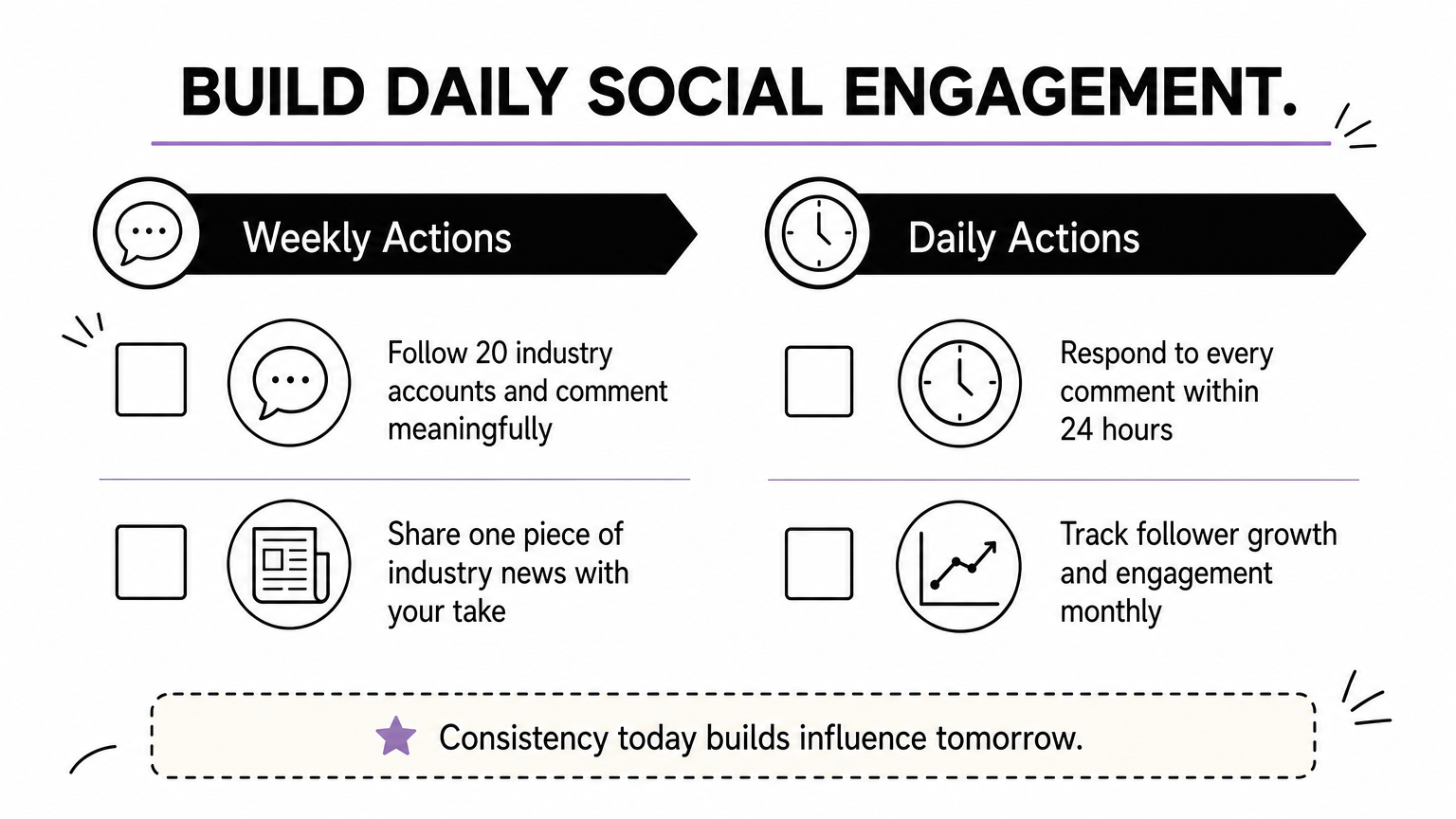
Pick one platform where your audience already spends time and commit to daily engagement there before expanding further:
- Follow 20 industry accounts and comment meaningfully each week
- Respond to every comment on your posts within 24 hours
- Share one piece of industry news weekly with your own perspective
- Track follower growth and engagement rate monthly, not just post count
5. Partner with influencers and complementary brands
Someone else’s audience trusts them already, and borrowing that trust is far cheaper than building it from scratch. Strategic partnerships with industry influencers or non-competing businesses put your name in front of people who’d otherwise never find you. This is one of the more overlooked brand awareness tactics because businesses assume influencer marketing means paying a celebrity, when the real value in South Africa often sits with niche experts who have smaller, highly engaged followings.
How it works
You identify people or businesses whose audience overlaps with yours but who aren’t direct competitors, then find a genuine reason to collaborate. That might be a joint webinar, a co-authored LinkedIn article, a product bundle, or simply a mutual shoutout campaign. The partnership works because both sides gain visibility without either one paying full advertising rates for the reach.
Borrowing trust from a partner’s audience beats buying attention from strangers.
Who it’s best for
This suits businesses with a niche audience and a product or service that pairs naturally with something else customers already buy. It also works well for companies wanting to expand brand awareness into a new segment without building an audience there from zero.
How to get started
List five businesses or individuals whose audience you’d want as customers, then reach out with a specific, low-effort collaboration idea rather than a vague partnership pitch. Start small, measure the response, and only formalize the relationship once you’ve seen real engagement from it.
6. Invest in targeted digital advertising and SEO
Organic reach only gets you so far, and sometimes you need to put money behind visibility to speed things up. Combining digital marketing to increase brand awareness with paid search, social ads, and solid SEO fundamentals means you show up exactly when someone searches for what you sell, rather than waiting for them to stumble across you. This tactic works alongside PR and content rather than replacing them, since ads convert better once someone has already seen your name in the news.

How it works
SEO gets your website ranking for terms your customers actually search, while paid ads on Google or LinkedIn put your business in front of people who match your ideal customer profile right now. You research keywords your audience uses, optimize your website content around them, then layer targeted ad campaigns on top for faster results while the SEO work builds momentum over months.
Paid visibility works best when it reinforces trust you’ve already started earning elsewhere.
Who it’s best for
This suits businesses with a defined budget and a clear sense of who their customer is, since untargeted ad spend disappears fast without results. Companies selling higher-value products or services, where one new client covers months of ad spend, see the strongest return.
How to get started
Start with three to five keywords your customers actually type into Google, then optimize one landing page around each before touching paid ads. Test a small campaign budget first, track cost per lead closely, and scale only what’s proven to work.
7. Sponsor events and give back to your community
People remember businesses that show up in person, especially in a market like South Africa where community ties still carry weight. Event sponsorship puts your logo, your name, and often your spokesperson in front of a room full of exactly the people you want as customers, whether that’s a local business breakfast or a national industry conference. Giving back through community initiatives works the same way, building goodwill that no advertisement can replicate.
How it works
Sponsorship works when you pick events your actual audience attends, not just the biggest event with the most attendees. You negotiate visibility beyond a logo on a banner: speaking slots, branded promotional products, or media coordination that gets your involvement covered by attending journalists. Community initiatives, like sponsoring a local school program or supporting a cause aligned with your industry, build the same recognition over a longer timeline.
A logo on a banner means little without a story journalists and attendees actually remember.
Who it’s best for
This approach suits businesses planning events already, or those wanting a community-focused brand visibility strategy that builds goodwill alongside direct visibility. Companies selling to local or regional markets see the fastest returns here.
How to get started
Shortlist three events your customers genuinely attend, then negotiate sponsorship terms that include media coordination, not just signage. Purple Word Box’s PR event support and media coordination handles exactly this, from branded materials to getting your involvement noticed by the right press.
Making brand awareness part of everyday business
None of these seven tactics work as a once-off campaign you launch and forget. Building awareness is a habit, not a project with an end date, whether that’s pitching journalists every month, publishing thought leadership consistently, or showing up in the same LinkedIn conversations week after week. Own that habit, and your business starts appearing everywhere your customers already look, long before they need to search for you.
Quick wins matter, but compounding visibility is what actually changes how your market sees you over a year, not a quarter. Realistically, most businesses can’t run PR, content, social engagement, and sponsorships all at once while still doing the work that pays the bills. That’s exactly where senior-level support pays for itself instead of costing you more guesswork.
Unsure where to start? Contact Purple Word Box for PR and communication support and let’s build a brand visibility strategy suited to your business, not a generic template.