The best brand awareness campaigns examples share three traits: one simple idea, a way for people to take part, and enough repetition that the idea sticks. Spotify Wrapped and Share a Coke suit businesses that hold customer data or can personalise a product. Dove and Old Spice suit brands that need to change how the market sees them. Dropbox suits product-led businesses, while the ALS Ice Bucket Challenge and Red Bull suit brands with a cause or a story to tell. Nando’s suits companies that can move fast and speak with a clear voice.
Most business owners read a list like this and conclude that awareness needs a global media budget. It does not. Each campaign below shows a mechanic you can shrink to size. You will find what each brand did, why people noticed, and how a small or mid-sized South African business can copy the thinking without copying the spend. Along the way you will see brand awareness ad examples, campaign ideas, and strategy lessons you can use this quarter.
At Purple Word Box, we work on visibility and credibility through media relations, content and campaign messaging. That shapes how we read these campaigns. We look past the budget and ask what earned the attention, what made it travel, and what a leader can realistically repeat.
1. Spotify Wrapped: turn customer data into content
Spotify Wrapped works because the customer becomes the advertiser. Among brand awareness campaigns examples, it is the cleanest case of a product doing the marketing itself, with almost no persuasion needed.
What the campaign did
Wrapped is a yearly personalised summary of each listener’s habits: top songs, top artists, minutes listened and listening personality. It arrives in a slick, story-style format built for sharing. Millions of people post their results, so Spotify branding fills social feeds without a traditional ad buy.
It works because the content is about the user, not about Spotify. People share it to say something about their taste, and the brand rides along. The timing matters too. Because it lands once a year, people wait for it, and that anticipation does part of the marketing.
The strongest awareness ad is one your customers publish for you.
How to adapt it
You do not need streaming data. Any business that records customer activity can produce a smaller version, as long as you have consent to use the data under POPIA.
- Send clients a "your year with us" summary with three personal numbers.
- Make it visual and easy to share on LinkedIn.
- Repeat it on the same date every year so it becomes an event.
2. Dove Real Beauty: own one belief for years
Dove shows that awareness can come from a point of view rather than a product claim. It is one of the most useful brand awareness strategy examples because the idea has outlasted every individual ad.
What the campaign did
Dove launched its Campaign for Real Beauty in 2004. It featured real women instead of models and questioned narrow beauty standards. Later pieces, such as the Real Beauty Sketches film in 2013, kept the same belief and changed the format. The creative moved on, but the message never did.
That consistency is the point. Dove stopped being just another soap brand and became linked to a specific emotional territory. People could say what Dove stood for, which is the real test of brand awareness.
Awareness lasts when the idea outlives the ad.
How to adapt it
Pick a belief that is true for your business and tied to what you sell. Then check that your own operations back it up, because audiences notice when a message is only decoration.
- Write your belief in one sentence.
- Use it in every press release, post and pitch.
- Review it yearly, but change the format, not the belief.
3. ALS Ice Bucket Challenge: make joining effortless
The Ice Bucket Challenge proves that a simple action plus a social invitation can spread faster than any paid media plan. It remains one of the most cited brand awareness campaign ideas for nonprofits and mission-led organisations.

What the campaign did
In 2014, people filmed themselves tipping ice water over their heads, donated to the ALS Association, and nominated friends to do the same. The action was visual, took one minute and needed no explanation. The nomination step turned every participant into a recruiter. The campaign went on to raise more than US$100 million in a matter of weeks.
The cause and the action were tightly linked, which kept the stunt from being empty noise. People understood why they were doing it, and that is what made the awareness last beyond the novelty.
Make joining easier than explaining.
How to adapt it
You cannot plan virality, but you can design for participation. South African businesses already do this around Mandela Day, when teams give 67 minutes to community service and share the results.
- Choose one action that takes under five minutes.
- Add a way to invite others.
- Tie it to a cause your business genuinely supports, and tell the story to local media.
4. Old Spice: speak to the buyer and answer back
Old Spice shows how awareness can reset a tired brand. This is one of the brand awareness ad examples marketers still study because it combined sharp targeting, humour and real-time engagement.
What the campaign did
In 2010, Old Spice launched "The Man Your Man Could Smell Like" with a confident, absurd spokesman. The ad was aimed at women who often buy body wash for the men in their lives, not only at the men who use it. The tone was unmistakable and quotable.
Then the brand did something many companies skip. It recorded short personalised video replies to fans and commenters on social media. The conversation became the campaign. The brand stayed in the news cycle because it kept responding instead of going quiet after launch day.
A great launch earns attention. A fast follow-up keeps it.
How to adapt it
Ask who actually decides to buy, then write for that person. Humour is optional, but a distinct voice is not.
- Identify the real buyer in your market.
- Plan a response routine for comments and mentions.
- Keep the tone consistent across every channel.
5. Share a Coke: personalise the packaging
Share a Coke is a textbook case for people who want to increase brand awareness with something as small as a name. It turned a global product into a personal one.

What the campaign did
Coca-Cola replaced its logo on bottles with common first names and encouraged people to find a bottle with their name, or a friend’s. The campaign began in Australia in 2011 and spread to many other countries. Shoppers hunted for names, photographed them and posted them.
The mechanic was easy to grasp. A bottle became a gift, and buying it became a small social act. The brand also got a steady stream of user photos that told other people the campaign was worth joining.
Personalisation gives people a reason to talk about a product they already know.
How to adapt it
Personalisation does not need packaging runs. It needs relevance. In a country with as many languages and communities as South Africa, local versions of a message often land better than one generic line.
- Name your clients’ towns, suburbs or industries in your content.
- Give customers a personalised certificate, card or report.
- Spotlight individual customers and ask permission first.
6. Dropbox referrals: let customers recruit for you
Dropbox shows how a product-led referral scheme turns existing users into an awareness channel. Of all the brand awareness campaigns examples here, it is the cheapest to imitate.
What the campaign did
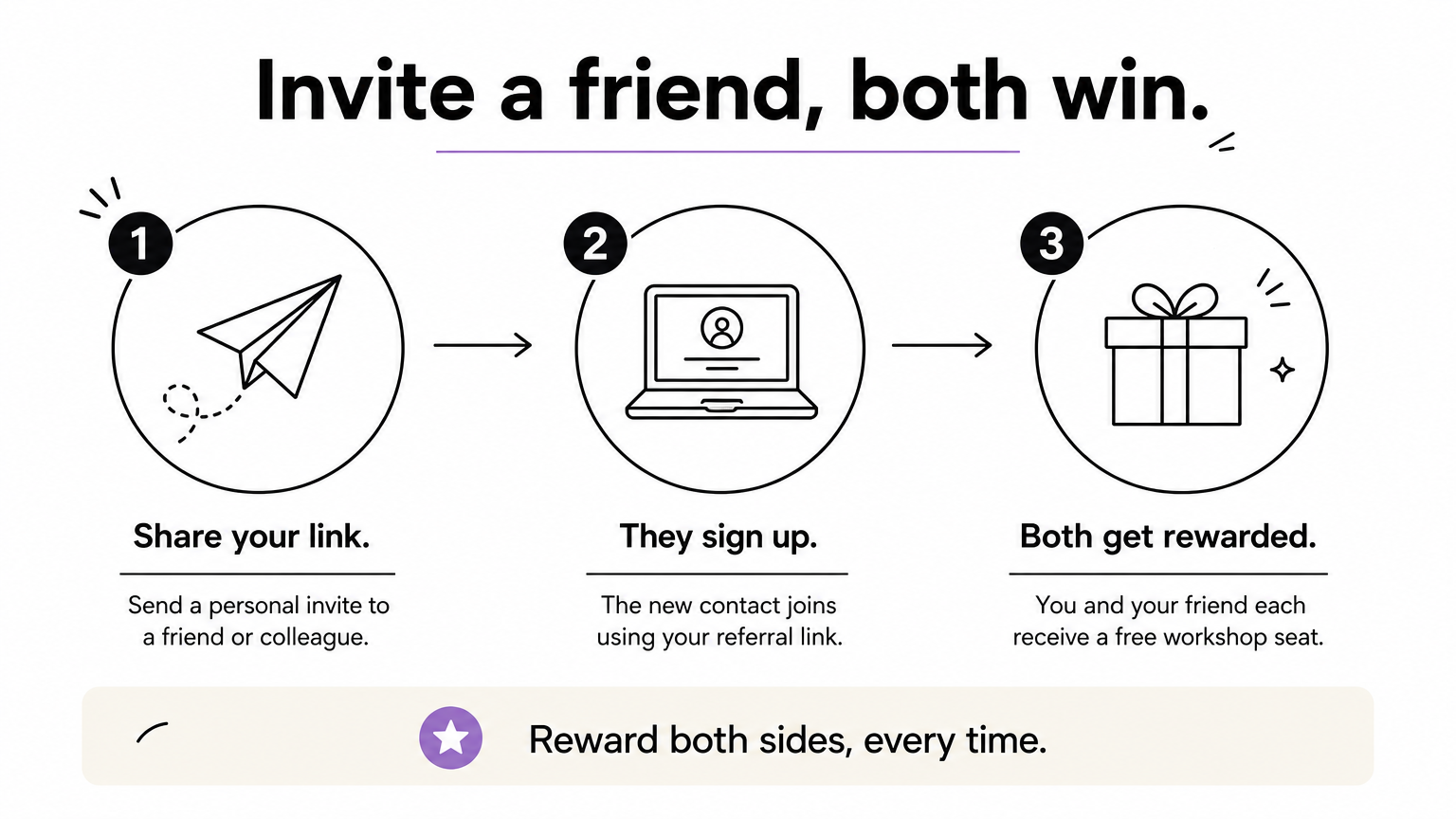
Dropbox offered extra free storage to people who invited friends, and gave the friend extra storage too. Both sides won, so there was no reason to hesitate. The reward was the product itself, which cost Dropbox little and meant something to users.
Each invitation was also a personal recommendation, which carries more weight than an ad. New users arrived already familiar with the brand and with a reason to try it. The programme grew awareness and sign-ups together.
A reward that costs you little and means a lot is the best referral incentive.
How to adapt it
A service business can use the same logic with a thoughtful offer. Think of what you can give away that your client values and that does not erode your margins.
- Offer a free audit, workshop seat or report for a referral.
- Reward both the referrer and the new contact.
- Make the referral process a single message or link.
7. Red Bull Stratos: become the publisher
Red Bull turned a drinks brand into a media brand, and Stratos is its best-known proof. It is a strong lesson in brand awareness strategy because the product barely appears in the content.
What the campaign did
In 2012, Red Bull backed Felix Baumgartner’s jump from roughly 39 kilometres above Earth and streamed it live. Millions watched. Media outlets around the world covered it, which gave Red Bull exposure it could never have bought through ordinary ad space.
The event fitted the brand’s identity of energy and extremes, so the association felt natural. Red Bull continues to produce events, films and athlete stories. The strategy is to be interesting in its own category rather than to talk about the product.
Create content about your world, not only your product.
How to adapt it
You do not need a stratosphere. You need a story your industry cares about and a reason for journalists to cover it.
- Publish original research or a data report for your sector.
- Host an event with proper media coordination.
- Share the findings in pitches, posts and speaking slots, not only on your website.
8. Nando’s: use a recognisable voice
Nando’s is a South African brand that grew into an international one, and its advertising is an example of voice doing the work of budget. Few brand awareness campaigns examples are as locally relevant for a South African reader.
What the campaign did
Nando’s built a reputation for cheeky, satirical ads that comment on current events and public debate. The ads often get picked up by news outlets and social media, so the brand earns coverage beyond the paid placement. People recognise the tone before they see the logo.
That recognition comes from consistency and nerve. The brand has a clear sense of what it will and will not joke about, and it moves quickly when a topic is in the news. The risk is real, because topical humour can misfire. Nando’s manages it by staying within a well-defined brand personality.
A distinct voice is an asset that compounds with every piece of content.
How to adapt it
Most small businesses cannot match Nando’s media spend, but they can match its clarity. Decide how your brand sounds and keep that voice in everything you publish.
- Write a one-page voice guide with do and don’t examples.
- Comment on industry news quickly, and only where you add something useful.
- Have a senior person approve topical content before it goes out.
Pick one idea and make it yours
Every campaign above did the same few things well. It had a simple idea, a reason for people to take part, and enough consistency for the idea to stick. None of them depended on size alone. Spotify used data, Dropbox used a referral, Red Bull used stories, and Nando’s used a voice.
For a South African business, the practical step is to choose one mechanic and test it at your scale. Back it with media relations so that journalists, partners and clients hear about it, and measure what moves: branded search, direct traffic, mentions and enquiries.
If you want senior help turning one of these ideas into a plan, speak to Purple Word Box about PR and brand visibility support.